Pokémon · Sports · Magic
Point your phone at a card. Card Glance reads the name, set and number, finds the exact variation, and tells you what it's worth — raw, graded, and what copies are asking on eBay right now.
Coming to iPhone. Free to start, with 20 scans a month that grow as you level up.
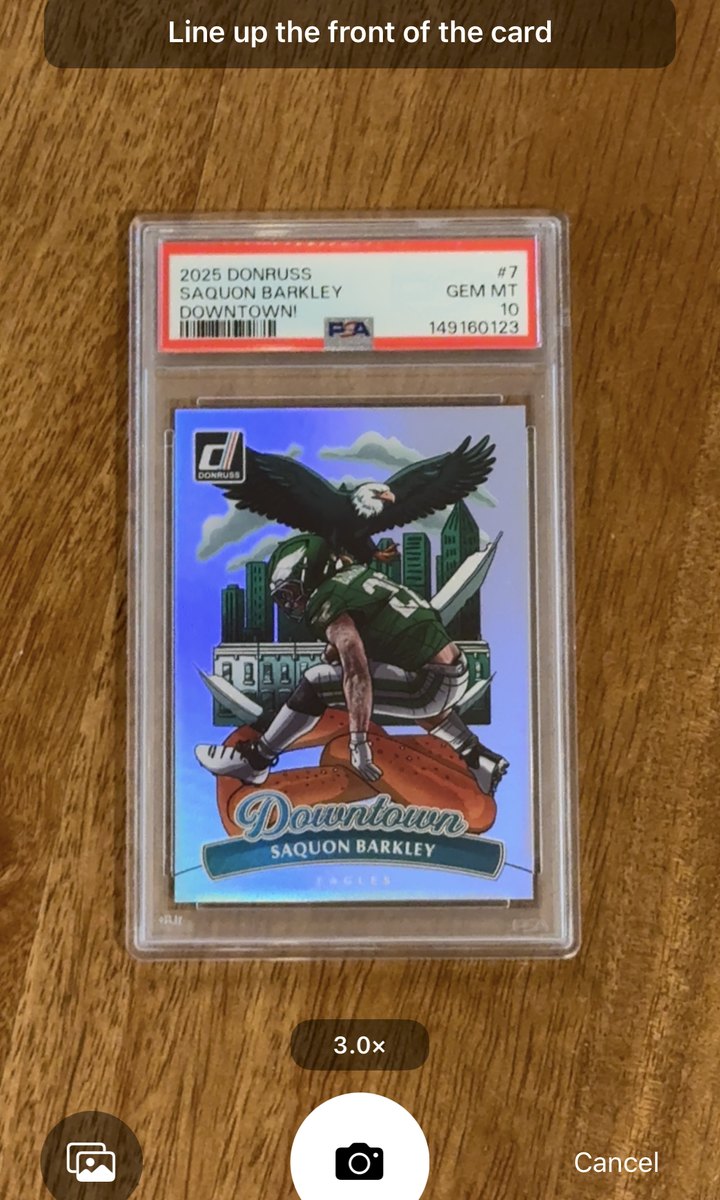
Hold the card up and tap the shutter — through a toploader or a graded slab, too. Nothing is sent until you've seen the photo and said yes.
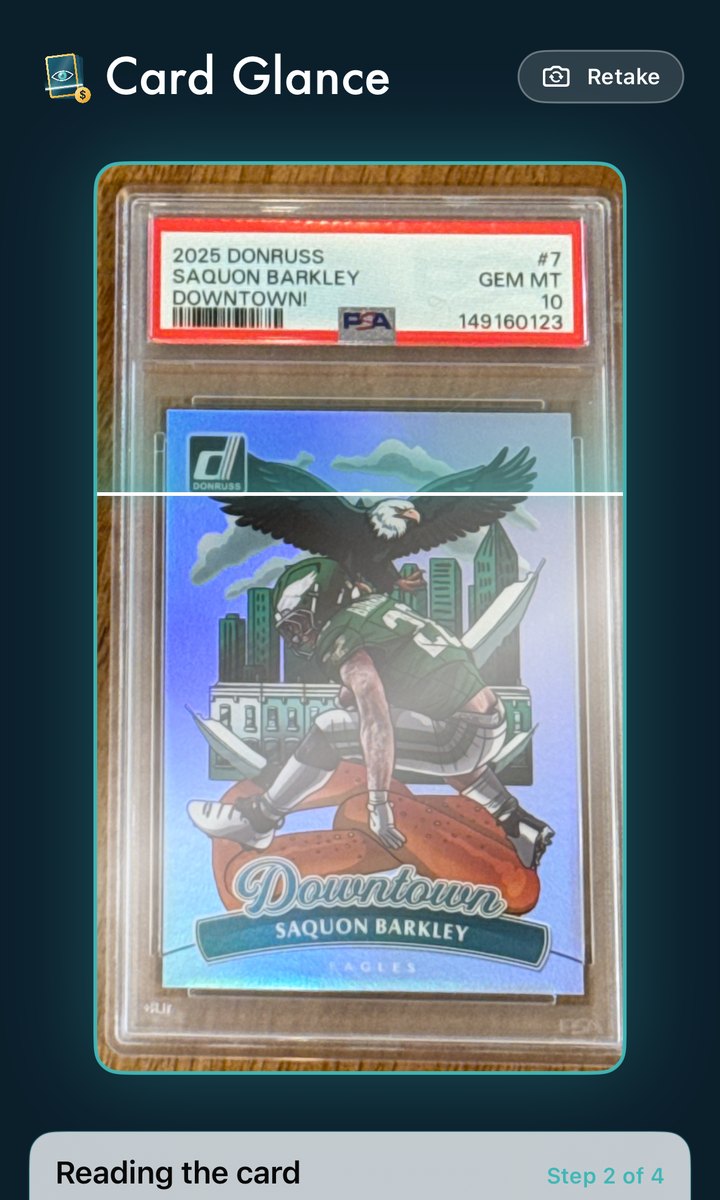
Name, set, card number, rarity, parallel and the grade on the label — and when two variations look alike, it says so rather than guessing.
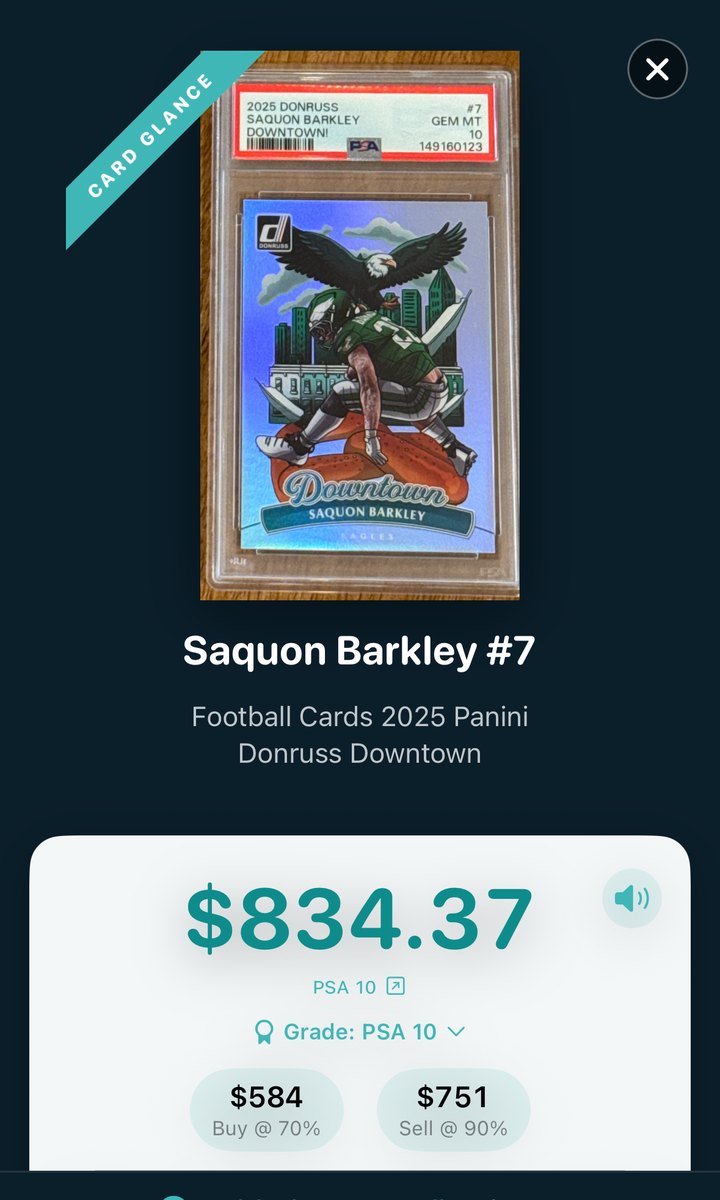
Raw, Grade 9, PSA 10 and BGS 10 from PriceCharting, spoken out loud, with live eBay listings and sold comps a tap away.
Getting it right
A card's front carries the picture; its back carries the facts — the set, the card number, and often the parallel. Photograph both and Card Glance takes the identification straight off the print instead of inferring it from the design, which is the surest way to pin down a sports card.
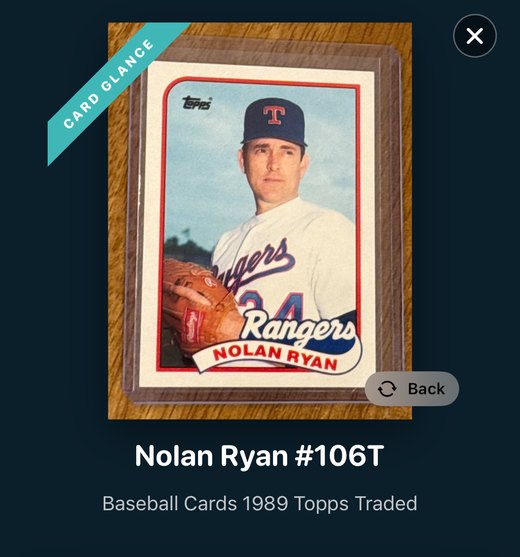
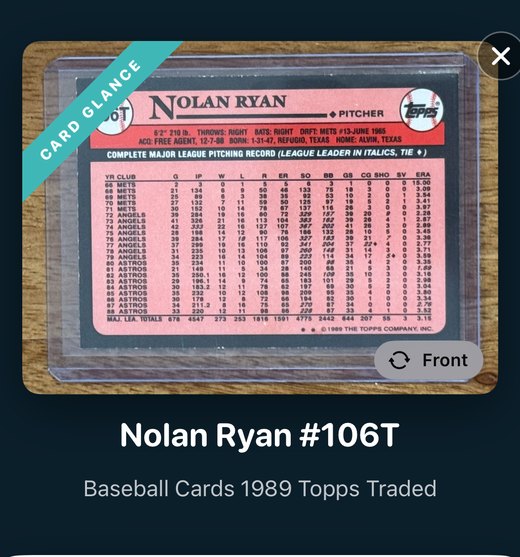
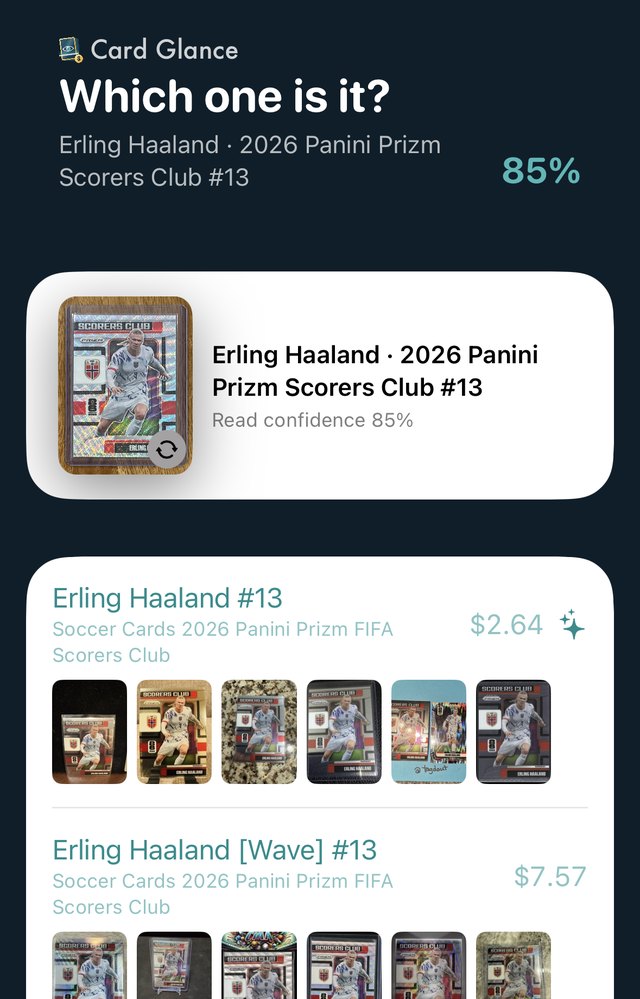
Some cards can't be settled that way. Parallels of the same card often differ only by the colour or pattern of the foil — a base, a Wave, a Gold — and a photo taken under a lamp won't always separate them. Rather than guess and hand you a confident wrong price, Card Glance shows the variations it's choosing between — with photos of each from live eBay listings — and lets you point at the one in your hand.
Raw and graded
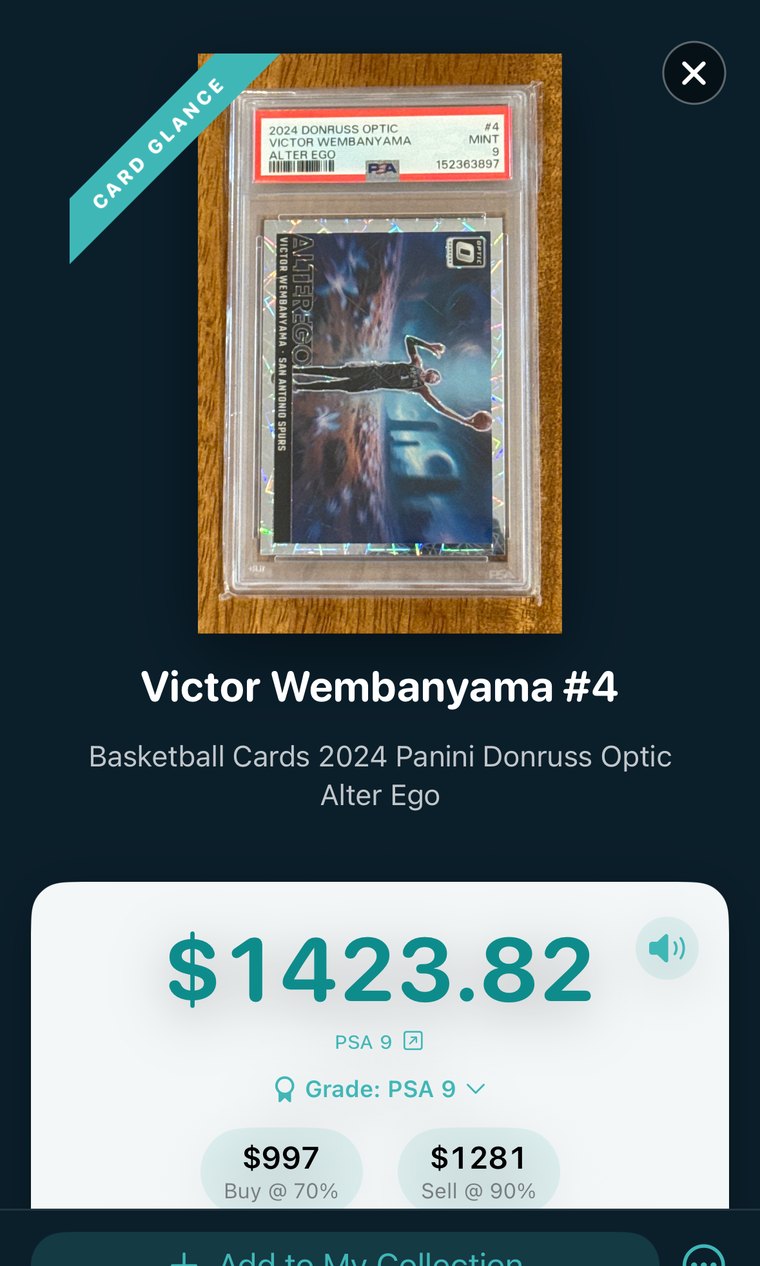
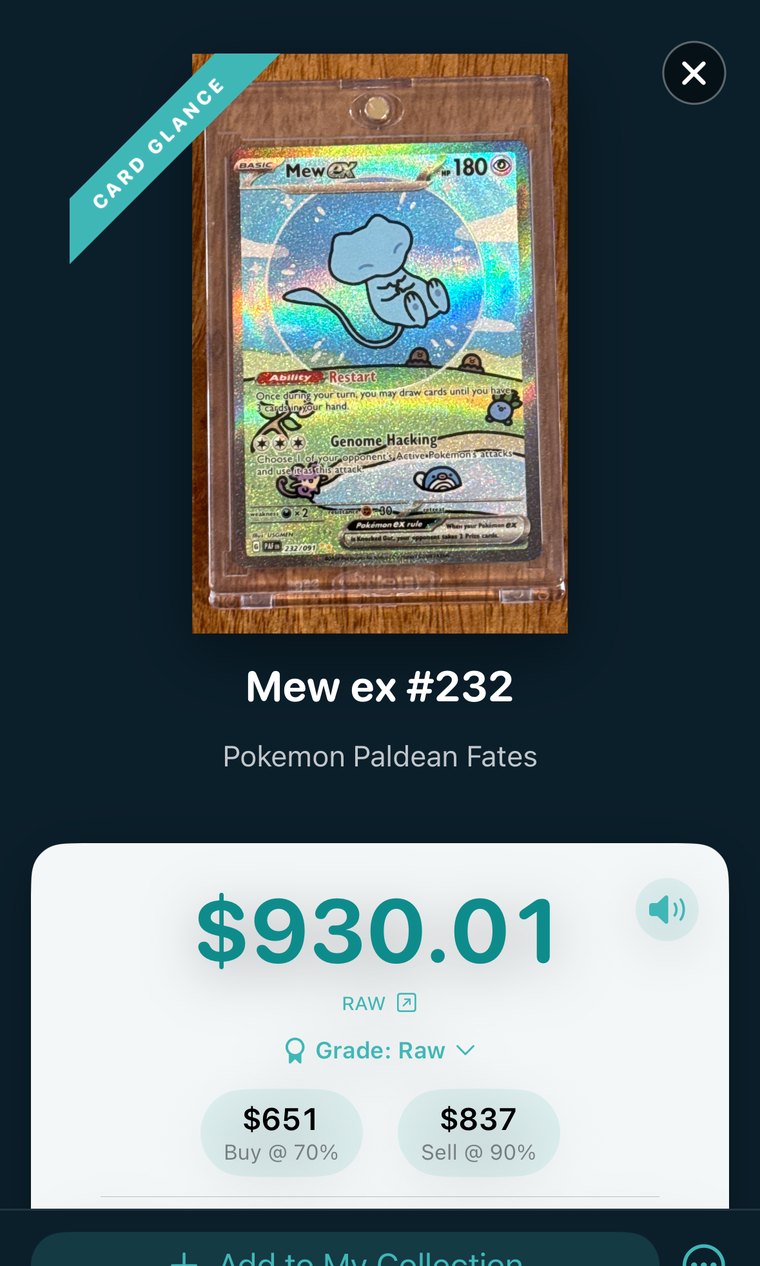
In a slab, Card Glance takes the grader, the grade and the certification number off the label and prices that exact grade. Loose or in a toploader, it prices the card raw — and shows what the same card fetches at Grade 9, PSA 10 and BGS 10, so you can see what grading would be worth before you send it away. Either way the grade is a menu, so you can price any grade of the card you're holding.
Cards in a binder
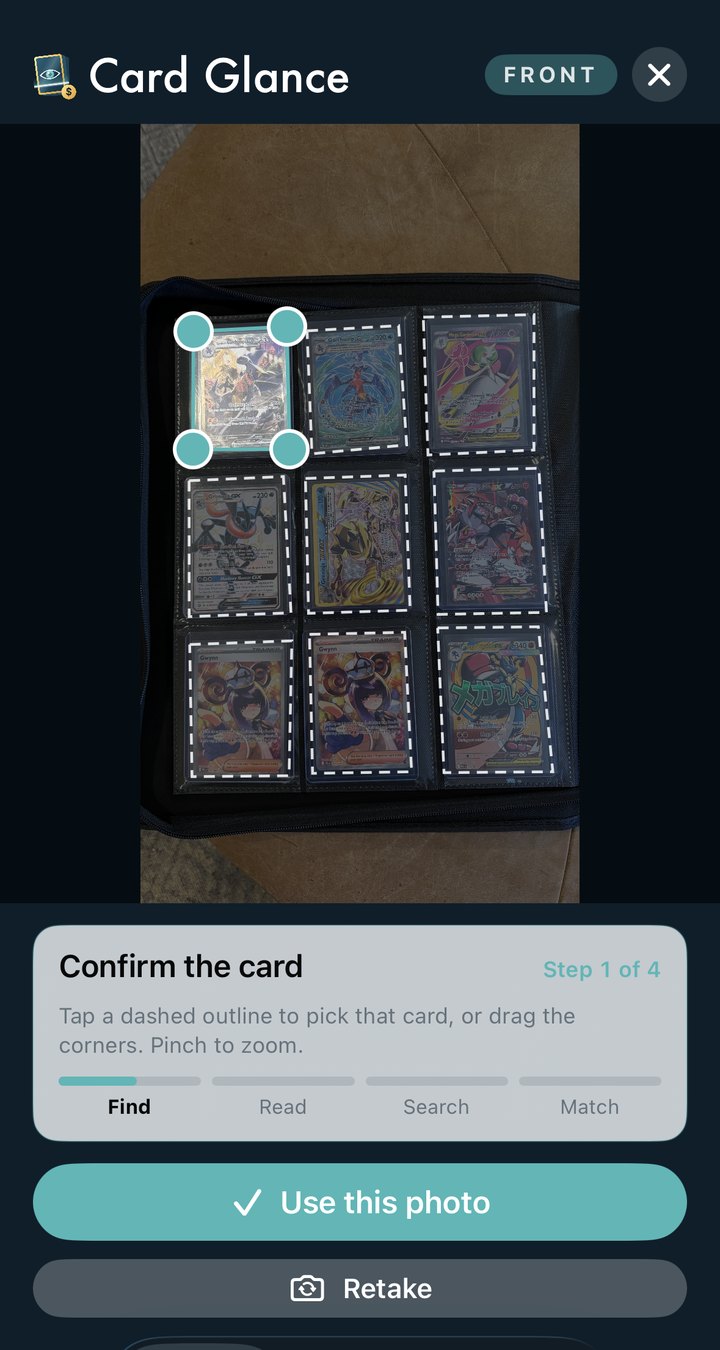
Most cards worth pricing are already in a page with eight others, and lining one up alone means pulling it out or holding the phone an inch from the plastic. Shoot the page instead. Card Glance finds every card in the photo, outlines each one, and starts on whichever sits nearest the middle — tap a different outline to switch, or drag the corners if it has framed one slightly off. Nothing is sent for identification until you've picked, so a page of nine costs one scan, not nine.
What's inside
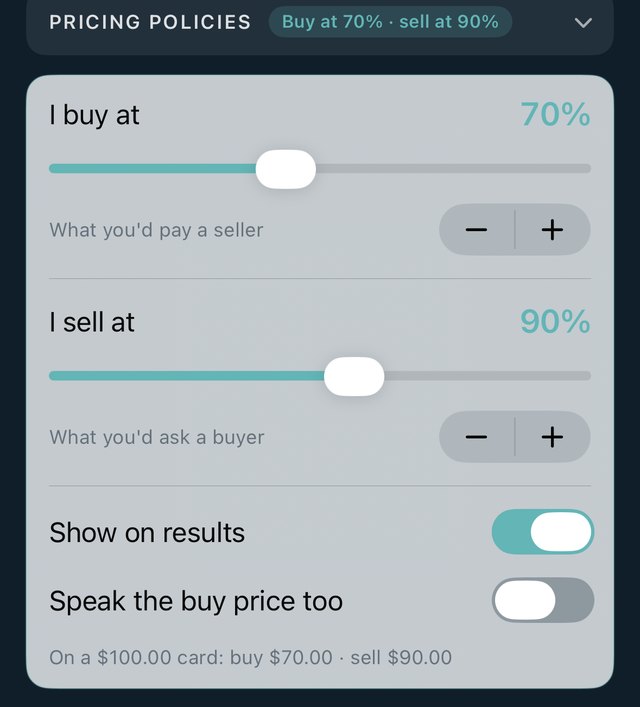
Collections total themselves and keep their own prices current. Set the percentages you buy and sell at, and every result and every total carries your numbers as well as the book value.
Every row carries the grade, the book value and your own buy and sell figures, so a box you have just worked through is already priced up. Nothing to copy into a spreadsheet, and no second pass to decide what you would offer for it.
Prices drift, so a collection can re-price itself in place. One tap walks the whole thing, oldest valuation first, and tells you how the total moved while you were away.
Cards it could not price are flagged rather than quietly dropped, and a miss never costs you a scan. When you want the figures somewhere else, a collection exports as it stands.
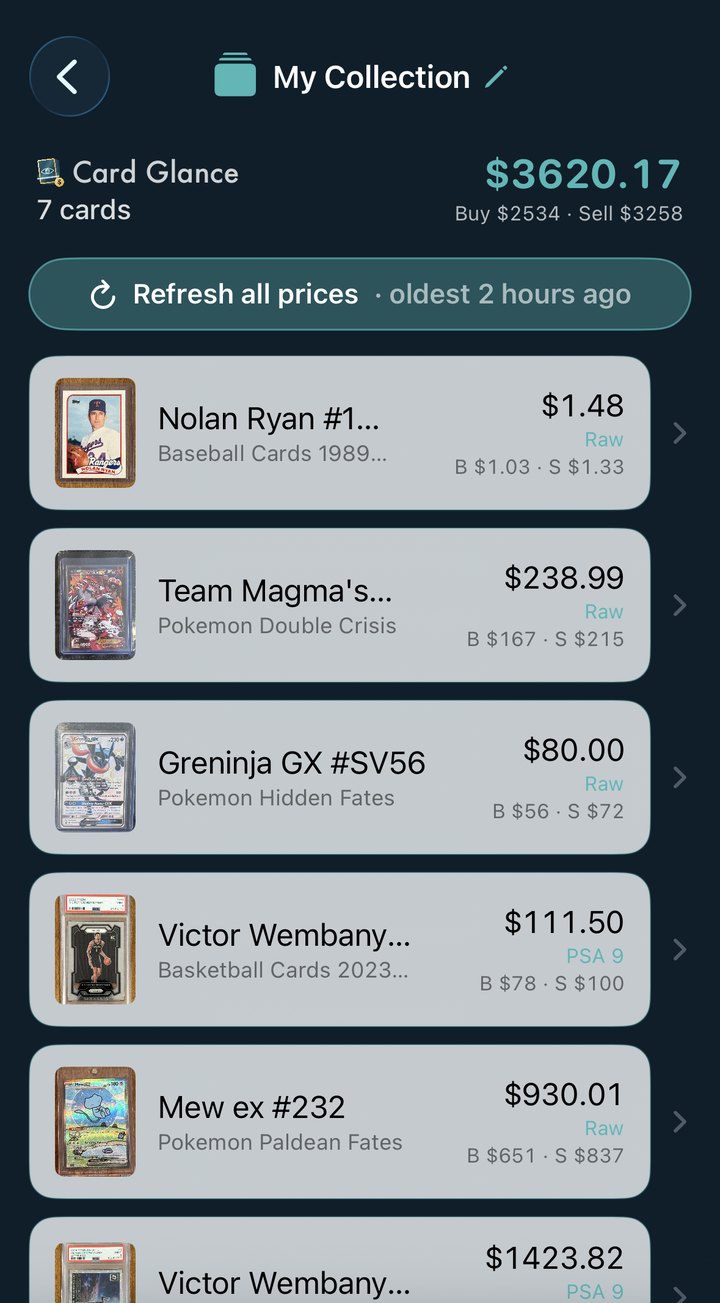
Keep scans in as many collections as you like — one per box, per kid, per show table — and see each one's total.
Prices refresh on their own, and every card keeps its own history, so you can see what a card has done since you scanned it.
Set the percentages of market you buy and sell at. Every result shows your offer and your ask beside the book value.
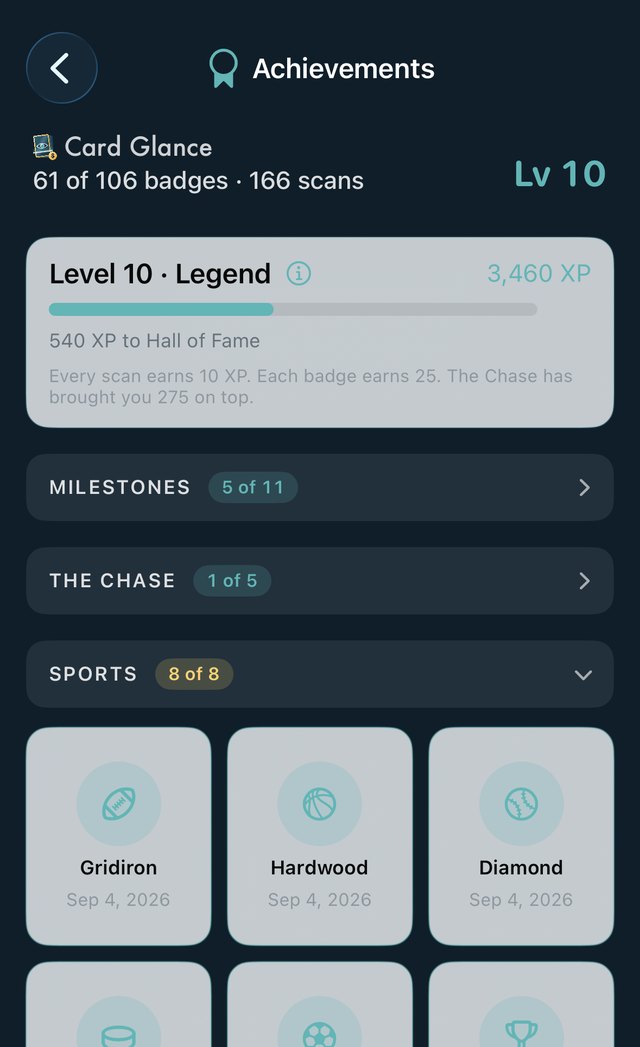
Over a hundred badges across sets, rarities, decades and grades. Levelling up earns you more free scans every month.
A shop's staff scan from a single monthly allowance. The owner invites by code and sees who scanned what.
One card, described rather than named — a rookie from a set, a numbered parallel, a card from a decade. Scan one that fits and the XP is yours.
Over a hundred badges to earn, eleven levels to climb, and a bigger free allowance at each one. The busiest scanners each month, and all time, are listed publicly — as an anonymous nickname unless you choose to be named. Reach the top level and you're in the Hall of Fame for good.
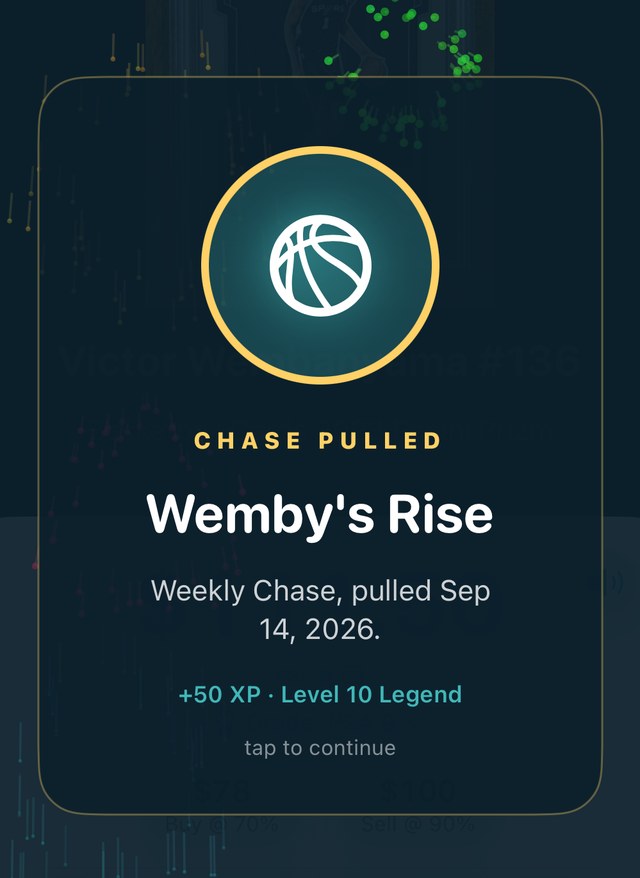
And every week there's a Chase: one card, described rather than named — a rookie from a particular set, a numbered parallel, a card from a given decade. Scan one that fits and it's yours, with the XP that comes with it. A new one each week, and a harder one each month.
Launch list
One email when the app hits the App Store, and one if there's a TestFlight spot going. Nothing else, and nobody else gets your address.
 Card Glance